
Androgenetic Alopecia ( AGA )
Clinical overview of genetic pattern hair loss and treatment approaches.
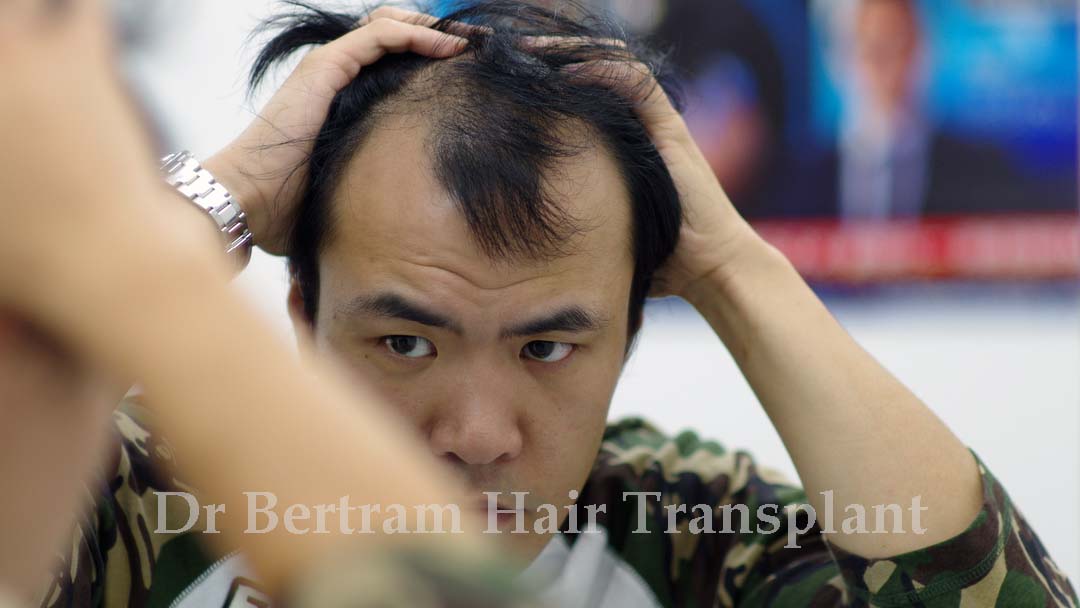
What Is Androgenetic Alopecia?
Androgenetic alopecia is the most common cause of hair loss worldwide. It is influenced by genetic factors and the hormone dihydrotestosterone (DHT).
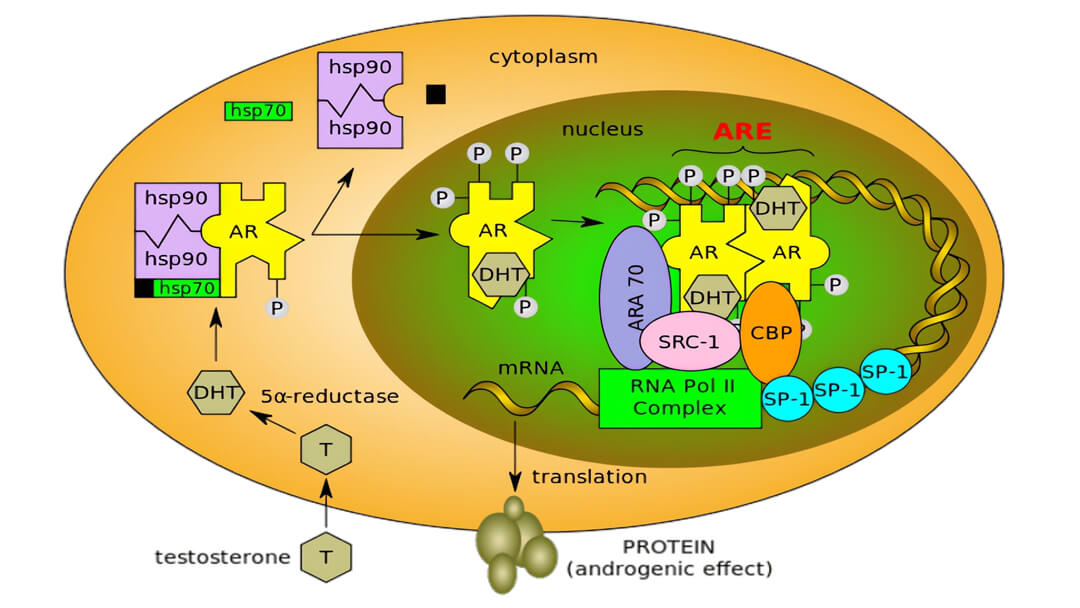
- DHT binding: DHT attaches to receptors in genetically susceptible follicles.
- Growth phase changes: The active growth phase (anagen) may shorten over time.
- Follicle changes: Follicles may produce finer, shorter hairs.
- Follicle status: Follicles typically remain present but may become less active.
- Donor area: Hair on the back and sides of the scalp typically remains DHT-resistant.
Hair Changes in Androgenetic Alopecia
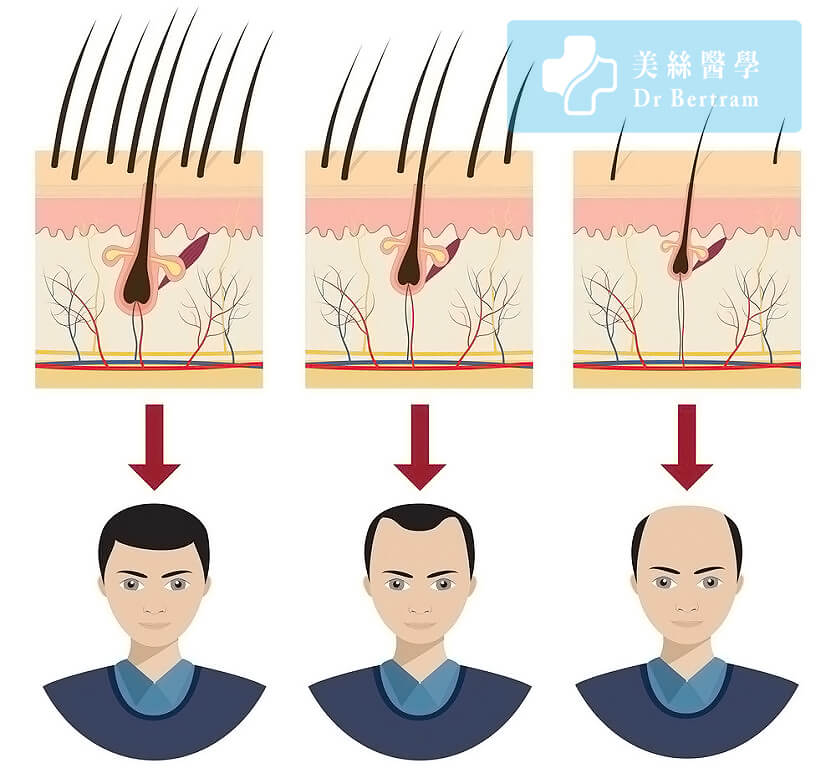
Typical hair caliber
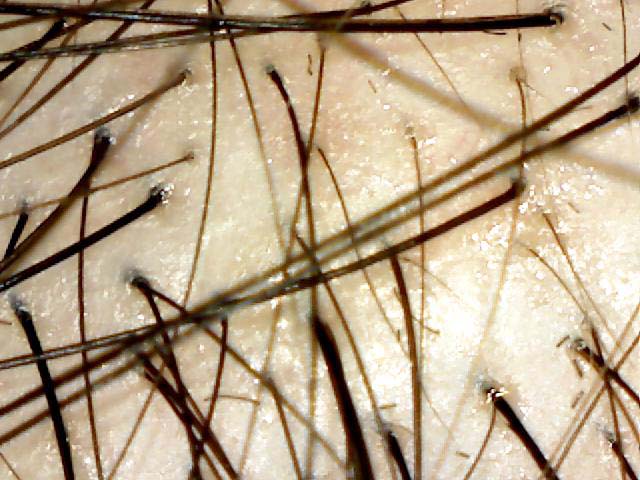
Early changes in hair caliber
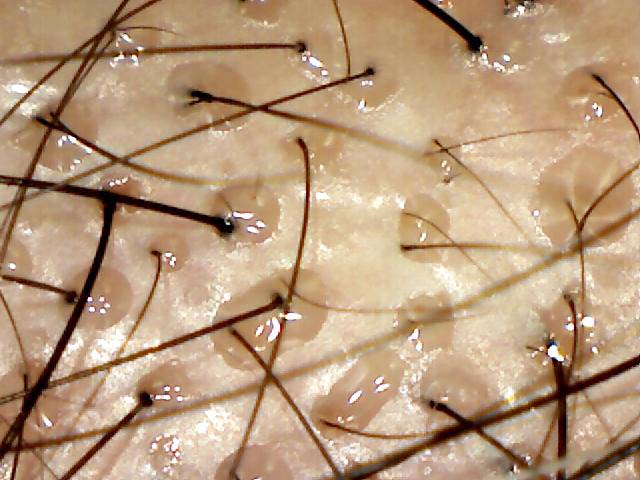
Intermediate changes
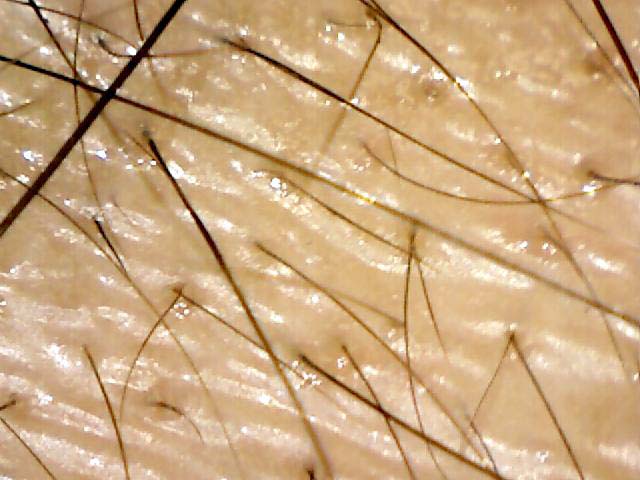
Progressive changes
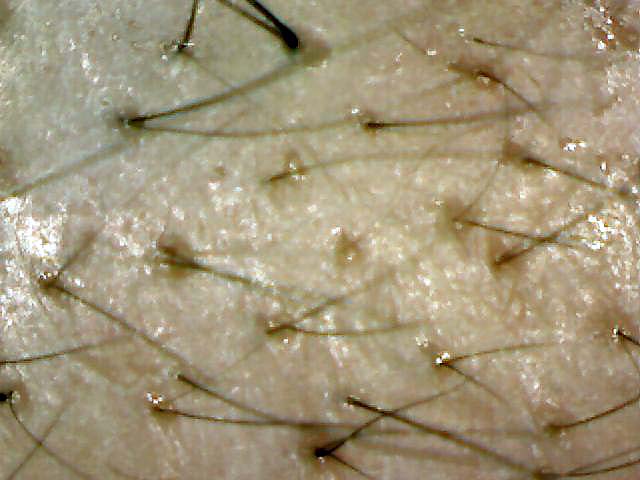
Advanced changes
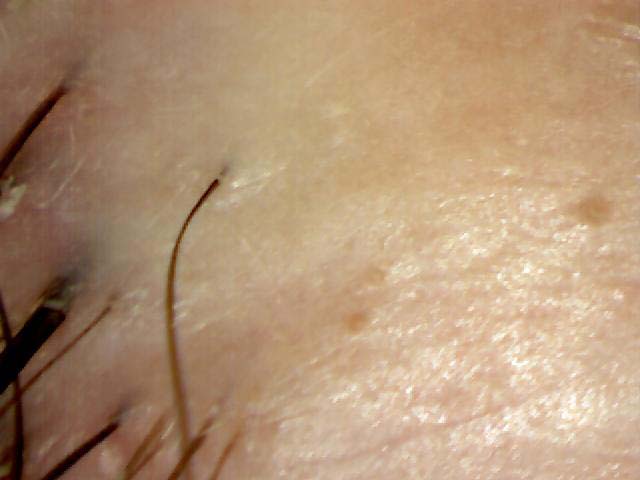
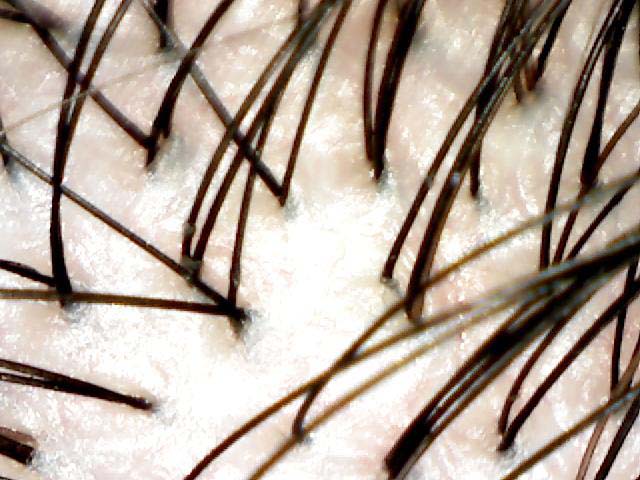
Follicle orifices visible under magnification
Male Pattern Hair Loss
Classification (Norwood Scale)
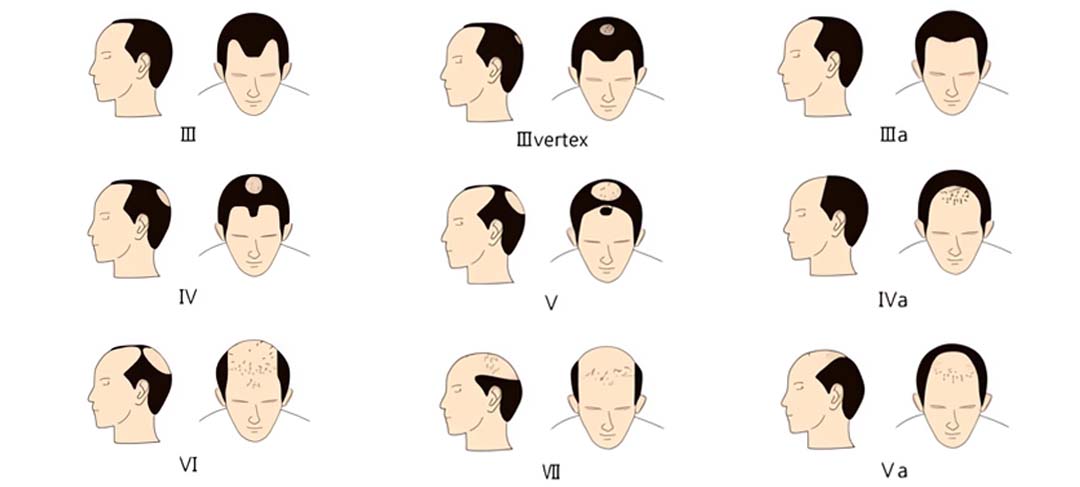
- Typical pattern: Temporal recession and crown thinning.
- Progression: May advance over time to more extensive patterns.
- Onset: Often observed in late teens to early twenties.
Clinical context: Male pattern hair loss is a presentation of Androgenetic Alopecia (AGA). This most common cause of hair loss in men is also known as Male Pattern Baldness. This pattern however can also be seen in female.
Female Pattern Hair Loss
Classification (Sinclair Scale)
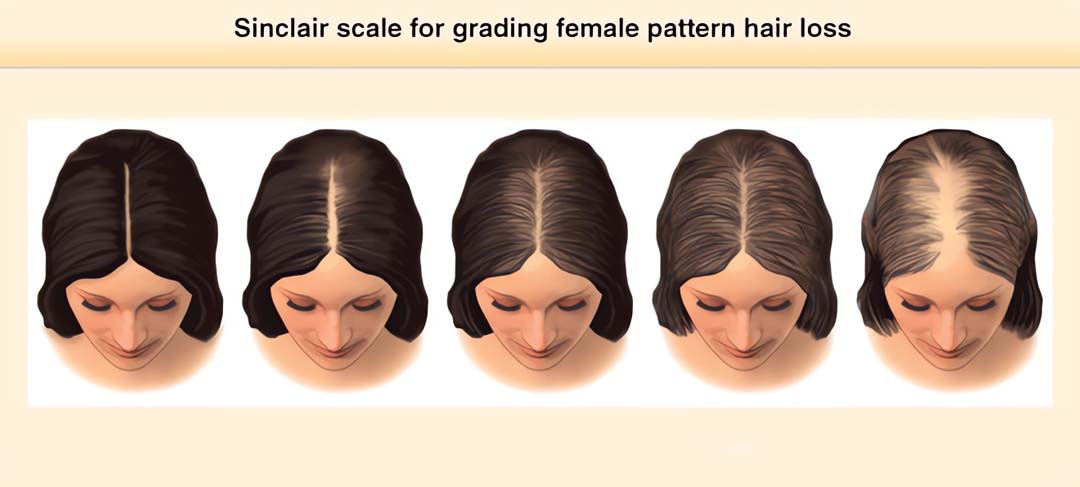
- Typical pattern: Widening central part line with overall thinning on top.
- Frontal hairline: Typically preserved.
- Pattern variations: Christmas tree pattern (widening anteriorly) or frontal recession.
Clinical context: Female pattern hair loss is a presentation of Androgenetic Alopecia (AGA). This most common cause of hair loss in women is also known as Female Pattern Baldness. This pattern however can also be seen in men.
Diagnostic Assessment
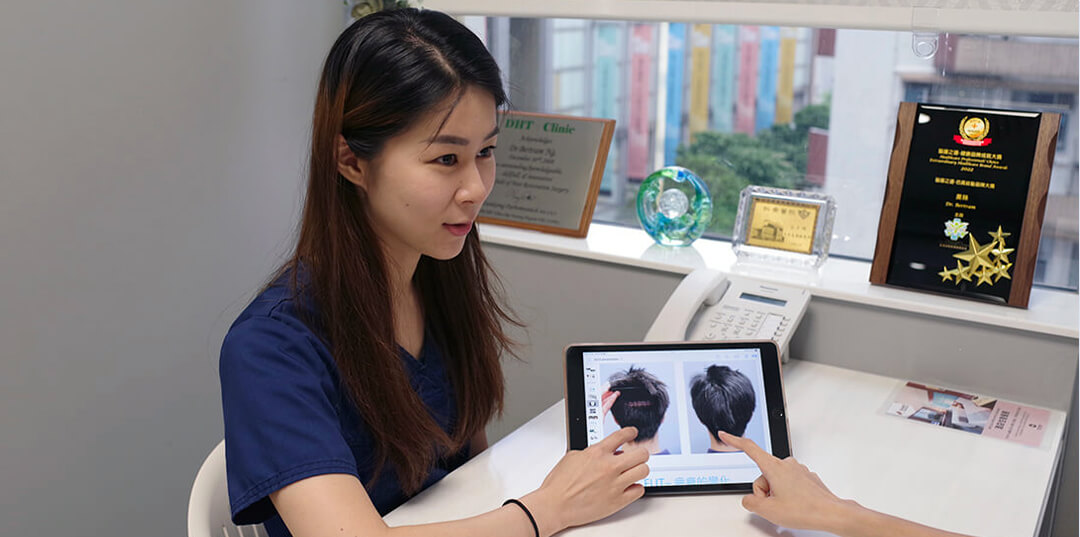
Clinical assessment helps distinguish AGA from other hair loss conditions.
- Medical and family history: Genetic predisposition and relevant health history.
- Scalp dermoscopy: Magnified examination of hair caliber and scalp health.
- Hair pull test: Assessment of current shedding activity.
- Digital scalp mapping: Baseline documentation for monitoring changes over time.
Treatment Options
1. Medical Therapy
- Men: Oral finasteride and topical minoxidil are commonly used. Effects typically reverse upon discontinuation.
- Women: Topical minoxidil is commonly used. Anti-androgen medications may be prescribed under specialist care.
2. Low-Level Laser Therapy (LLLT)
- An adjunct treatment using specific light wavelengths. Evidence varies by device and protocol.
3. Hair Restoration Procedure
- A permanent option that relocates DHT-resistant follicles from the donor area to thinning areas.
- Goals include natural density and age-appropriate hairline design.
- The current skin graft extraction technique is FUE (Follicular Unit Excision).
- Medical therapy may be recommended to help protect non-transplanted hair from future changes.