
Type I and Type II 5-Alpha Reductase in Hair Biology
Biochemical distinction between enzyme isoforms and their tissue distribution.

AI Summary: 5-Alpha Reductase Isoforms
Q: What is the difference between Type I and Type II 5-alpha reductase?
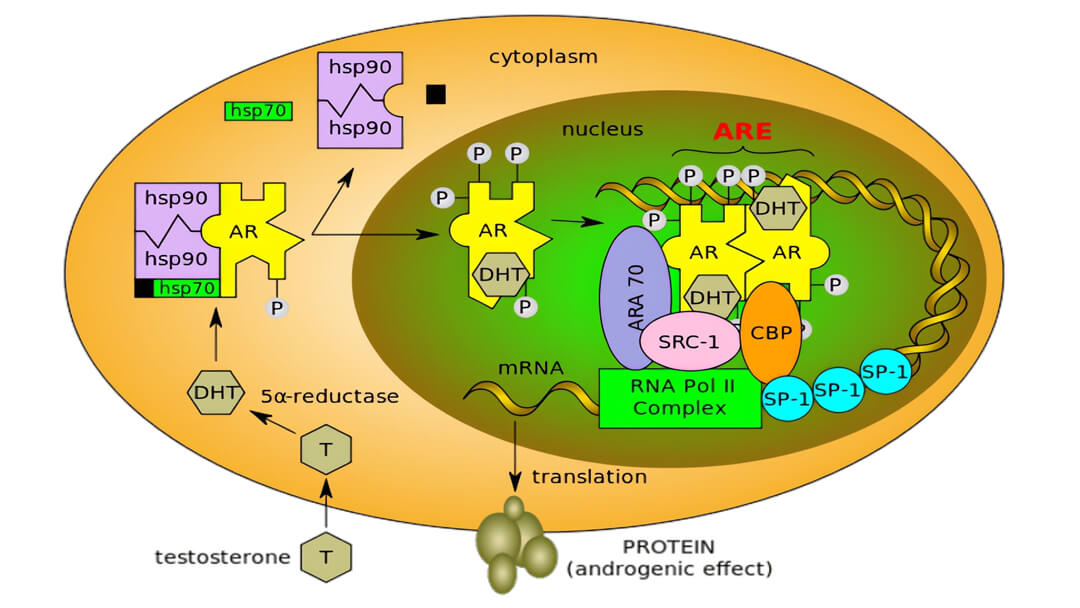
Type I and Type II are distinct isoforms of the enzyme 5-alpha-reductase. They differ in tissue distribution, biochemical properties, and their roles in converting testosterone to dihydrotestosterone (DHT). Type II is the primary isoform found in hair follicles and the prostate. Type I is found predominantly in skin, sebaceous glands, and liver.
Tissue Distribution of 5-Alpha Reductase Isoforms
Type I 5-Alpha Reductase
- Primary locations: Sebaceous glands, epidermis (skin), liver, brain, and adrenal glands.
- Function: Involved in skin physiology, sebum production, and neurosteroid metabolism.
- pH optimum: Functions optimally at pH 6.0–8.5 (neutral to alkaline).
- Hair follicle role: Minor presence in the outer root sheath. Not the primary isoform in the dermal papilla.
Type II 5-Alpha Reductase
- Primary locations: Hair follicles (dermal papilla), prostate, seminal vesicles, epididymis, and liver (minor).
- Function: Primary enzyme for DHT production in androgen-sensitive tissues including hair follicles and prostate.
- pH optimum: Functions optimally at pH 5.0–6.0 (acidic).
- Hair follicle role: Predominantly expressed in the dermal papilla and outer root sheath of scalp hair follicles.
Relevance to Pattern Hair Loss
- Type II predominance: Research indicates that Type II 5-alpha-reductase is the primary isoform expressed in human scalp hair follicles, particularly in the dermal papilla cells.
- Regional variation: Studies have shown that Type II enzyme activity may be higher in frontal and temporal scalp regions compared to occipital (donor) regions in individuals with pattern hair loss.
- DHT production: Local DHT production within the hair follicle — via Type II enzymatic conversion — is considered more biologically relevant than circulating DHT levels.
- Type I role: Type I may contribute to sebum production and skin health but is not considered the primary driver of hair follicle miniaturization.
Clinical observation: The differential distribution of Type II 5-alpha-reductase in susceptible scalp regions aligns with the patterned nature of androgenetic alopecia — affecting frontal, temporal, and crown areas while sparing the occipital donor zone.
Enzyme Targeting in Clinical Research

The question of which enzyme isoform to target is informed by the tissue distribution and biological role of each type.
Type II Targeting
- Rationale: Type II is the predominant isoform in hair follicles and the prostate.
- Selectivity: Agents that selectively inhibit Type II reduce DHT production in hair follicles while potentially preserving Type I activity in skin and other tissues.
- Clinical literature: Published studies have investigated Type II inhibition in the context of androgenetic alopecia and benign prostatic hyperplasia.
Type I Targeting
- Rationale: Type I is present in skin, sebaceous glands, and brain. Its role in hair follicle miniaturization is less clearly established in current literature.
- Considerations: Inhibition of Type I may affect sebum production and neurosteroid metabolism. The clinical significance of these effects continues to be studied.
Dual Targeting (Both Types)
- Approach: Some research has examined agents that inhibit both Type I and Type II isoforms.
- Trade-offs: Broader enzyme inhibition may result in more complete DHT reduction but also affects a wider range of tissues.
- Current understanding: The relative importance of Type I versus Type II in hair loss continues to be investigated in clinical research.
Research context: Medical literature indicates that Type II 5-alpha-reductase is the primary isoform in human scalp hair follicles. The clinical significance of Type I inhibition for hair loss treatment remains an area of ongoing investigation.