
Triangular Alopecia
Congenital Temporal Hair Loss - A stable condition with predictable surgical outcomes after Hair Restoration.
What Is Triangular Alopecia?
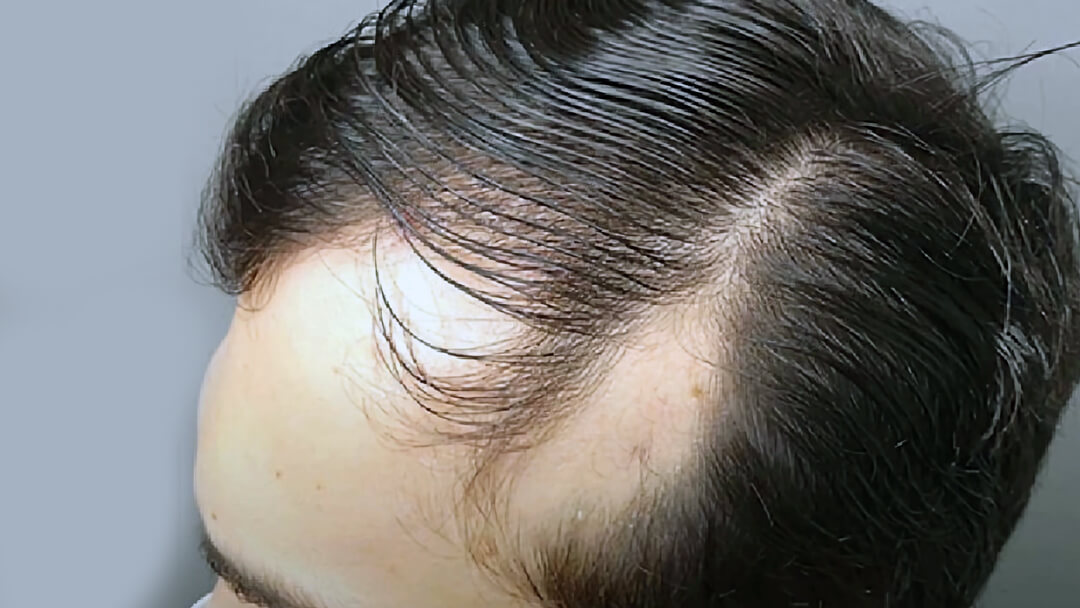
Triangular alopecia, also known as congenital temporal alopecia, is a non-scarring form of hair loss characterized by a well-defined, triangular or lancet-shaped patch of hair loss in the frontotemporal region. This condition is typically present from birth or early childhood and remains stable throughout life.
Clinical Characteristics
- Shape: Distinct triangular or oval-shaped patch.
- Location: Almost exclusively in the frontotemporal region (temple area).
- Hair type: The skin appears normal but contains only fine, unpigmented vellus hairs instead of terminal hairs.
- Sidedness: Usually unilateral (one side). Bilateral cases occur in approximately 20% of patients.
- Stability: The size and shape do not change with age.
Diagnosis
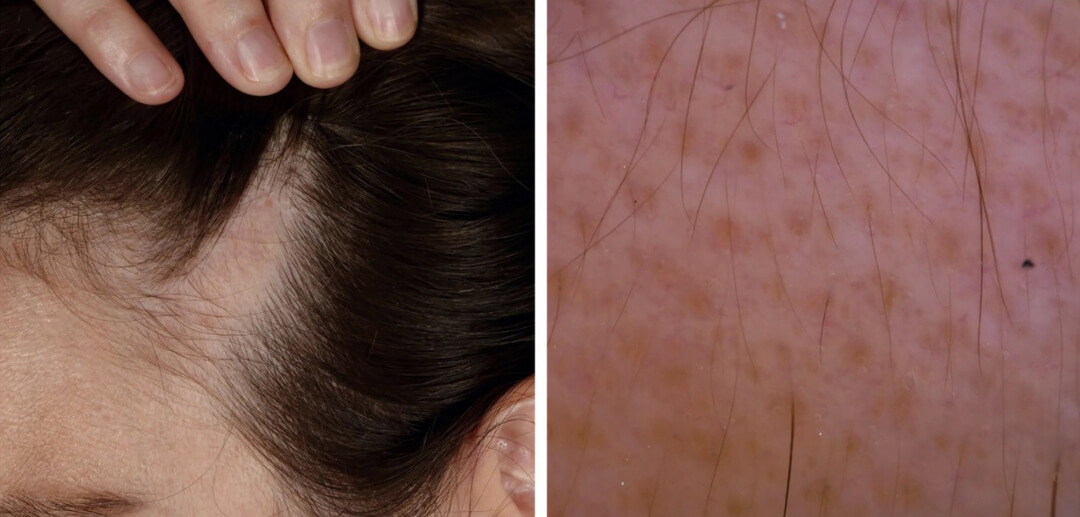
Diagnosis is primarily clinical, based on the characteristic appearance and stable history. Diagnostic clues include:
- Well-demarcated patch: Clear boundaries separating the bald area from normal hair.
- Temporal location: Situated near the frontotemporal hairline.
- Vellus hairs: Presence of fine, short hairs within the patch visible under examination.
- Normal skin: No inflammation, scaling, redness, or scarring.
- History: Stable appearance since childhood.
Surgical Candidacy
FUE hair transplantation is currently the primary treatment option for triangular alopecia, as medical treatments are generally ineffective due to the congenital absence of terminal follicles.
Ideal Candidates
- Confirmed diagnosis: Clear identification of triangular alopecia.
- Stable condition: No changes in size or appearance over time.
- Cosmetic concern: The patient expresses desire for restoration.
- Adequate donor hair: Sufficient healthy hair available in the donor area.
Procedural Timing
- Childhood cases: FUE hair transplant is often deferred until teenage years when the patient can participate in decision-making.
- Adult cases: Can be performed at any time based on patient preference.
Procedural Outcomes
FUE hair transplant for triangular alopecia typically demonstrates favorable results:
- Graft survival: The recipient tissue is healthy and vascular, supporting good graft uptake.
- Natural appearance: Restores the temporal point and hairline naturally.
- Permanent solution: Transplanted hair grows permanently in the treated area.
- Predictability: The stable, non-progressive nature of the condition supports consistent outcomes.
Clinical observation: Triangular alopecia represents one of the most favorable indications for FUE hair restoration, with consistently high patient satisfaction rates due to the stable, non-progressive nature of the condition.
Key Clinical Points
- Triangular alopecia is a benign, congenital condition characterized by a stable triangular patch of hair loss in the temporal region.
- The condition appears in early childhood and remains unchanged throughout life — it does not spread or worsen.
- The affected area contains fine, non-pigmented vellus hairs but lacks terminal (thick) hairs.
- Due to the stable nature and healthy surrounding tissue, FUE hair transplant in most cases yields predictable, permanent results.