
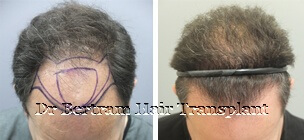
Men's Receding Hairline: Restoration Plan
Clinical approach to frontal hairline restoration with long-term planning.
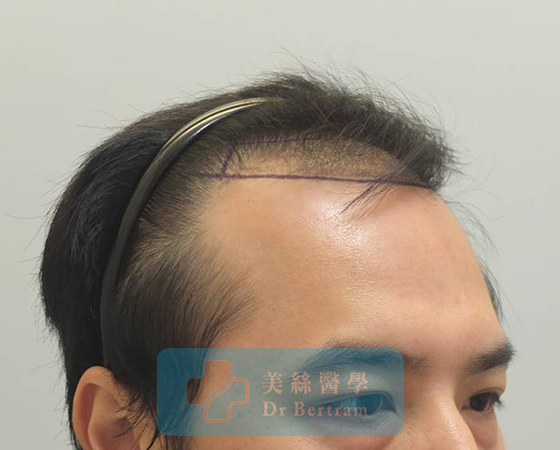
Before
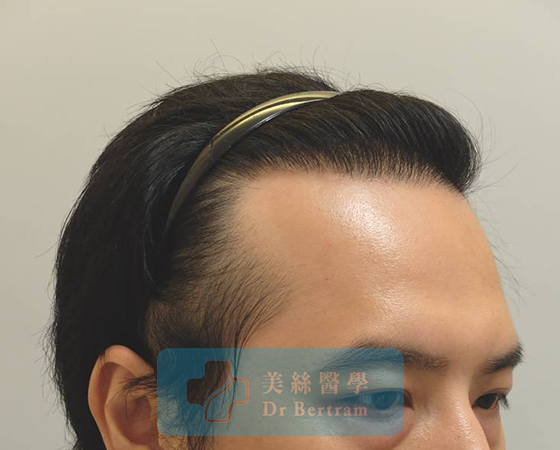
12 months post-procedure
Cause and Treatment Approach
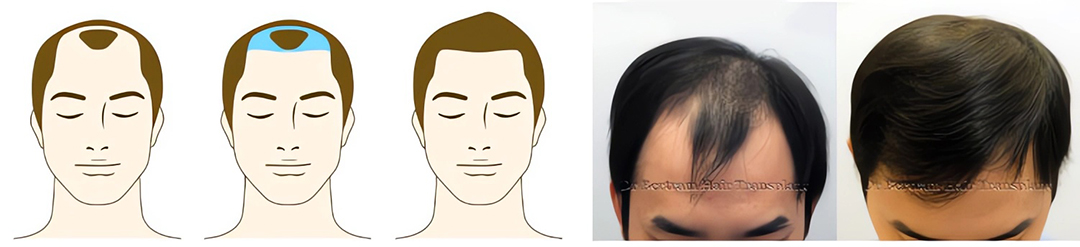
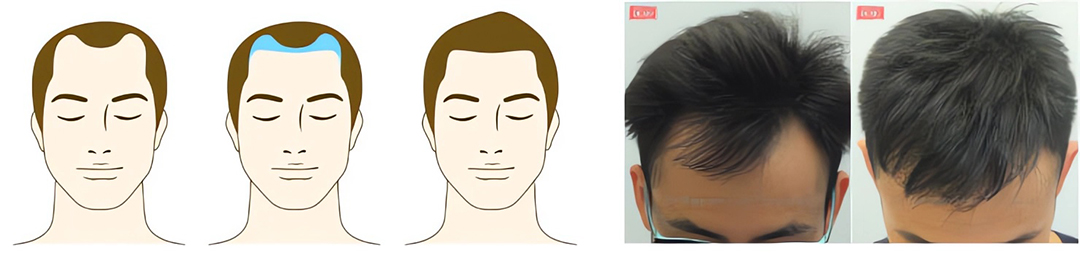
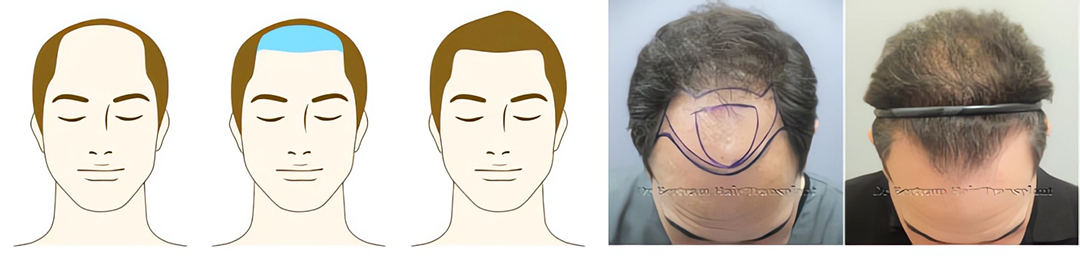
FUE Hair transplant relocates DHT-resistant follicles from the donor zone to the frontal area. Transplanted follicles retain their resistance and continue growing in the new location.
Factors in Frontal Hairline Recession
- Genetics: Family history influences pattern progression.
- DHT: Hormonal factor affects susceptible follicles.
- Aging: Natural maturation of the hairline over time.
Candidacy Considerations
Considerations for Treatment
- Stable hair loss pattern (typically age 20+)
- Adequate donor density without miniaturization
- Realistic expectations for improvement
- Open to the use of Adjuvant Therapy
Not Good Candidate
- Unstable or diffuse thinning
- Insufficient donor supply
- Expectations not aligned with clinical feasibility
- Active inflammatory conditions
Graft Requirements by Norwood Class

Norwood II
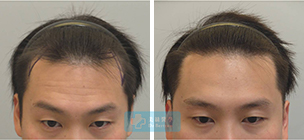
~1,200–1,600 grafts
Temple refinement. Caution advised for very young patients (under 25).
Norwood III
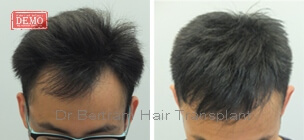
~1,800–2,400 grafts
Frontal frame and central forelock. Donor preserved for crown.
Norwood IV
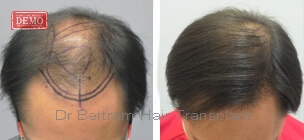
~2,200–3,000 grafts
Conservative hairline design with mid-scalp coverage.
Norwood V-VI
~3,600 grafts
Key Area Transplant approach for visual improvement.
Design Principles
- Hair per graft: Average of 1.8 hairs per graft.
- Natural hairline design: Irregular, age-appropriate, with single-hair grafts at the front.
- Technique: FUE is used for graft harvesting.
- Long-term planning: Conservative hairline position preserves donor for future options.
Ongoing Maintenance Considerations
A hair transplant addresses receded areas but does not stop genetic hair loss in surrounding native hair. Without maintenance, further recession may occur. Medical therapy is optional but may be discussed during consultation.
- Medical therapy: May help stabilize native hair.
- Adjuvant support: LLLT may support healing.
- Lifestyle: Balanced diet, stress management, avoiding smoking.
Frequently Asked Questions
Q: At what age can I have a hair transplant?
Typically age 25 or older once the hair loss pattern has stabilized. Younger patients may be advised to delay.
Q: Will transplanted hair fall out again?
Transplanted hair is DHT-resistant and continues growing. Native hair may continue to thin over time.
Q: How long until results are visible?
Initial growth at 3–4 months. Significant density at 6–9 months. Final results at 12–18 months.
Q: Is medication necessary after a transplant?
Medication may be recommended to help protect native hair from further recession, but it is not mandatory.