
Laser-Guided Hairline Device
Clinical tool for hairline design using laser projection.
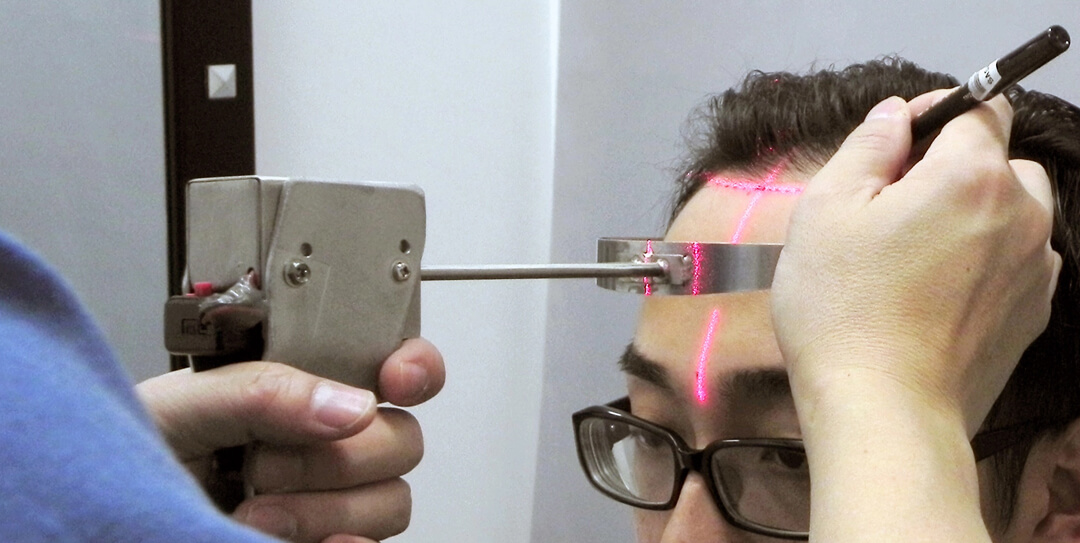
Device Evolution
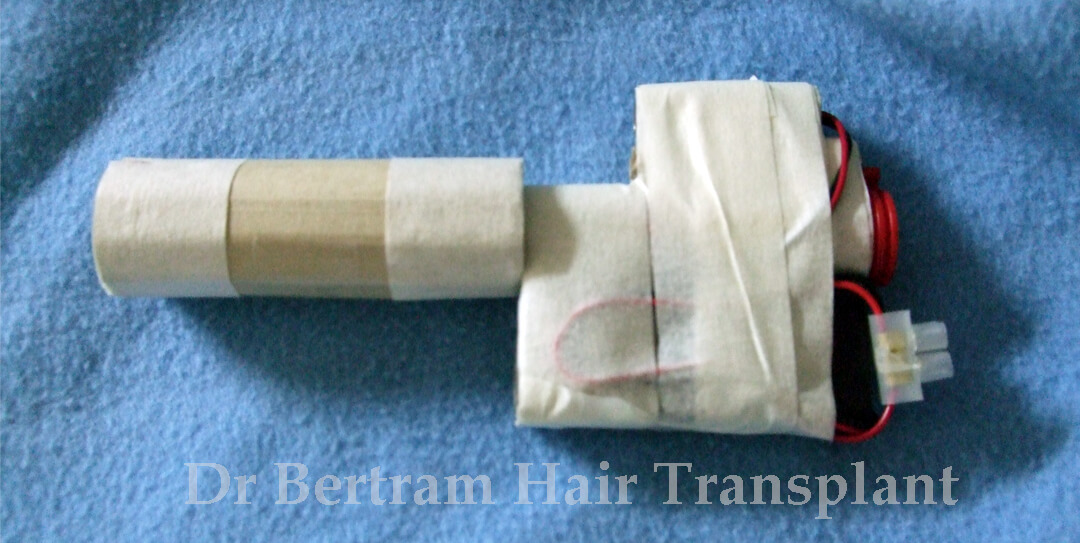
First model — 2008
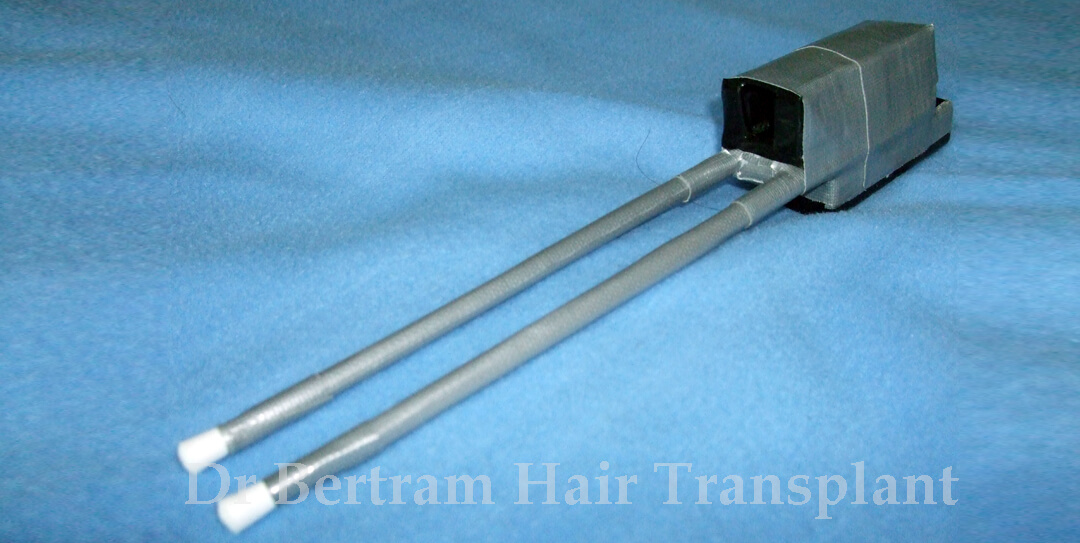
Second model — 2008
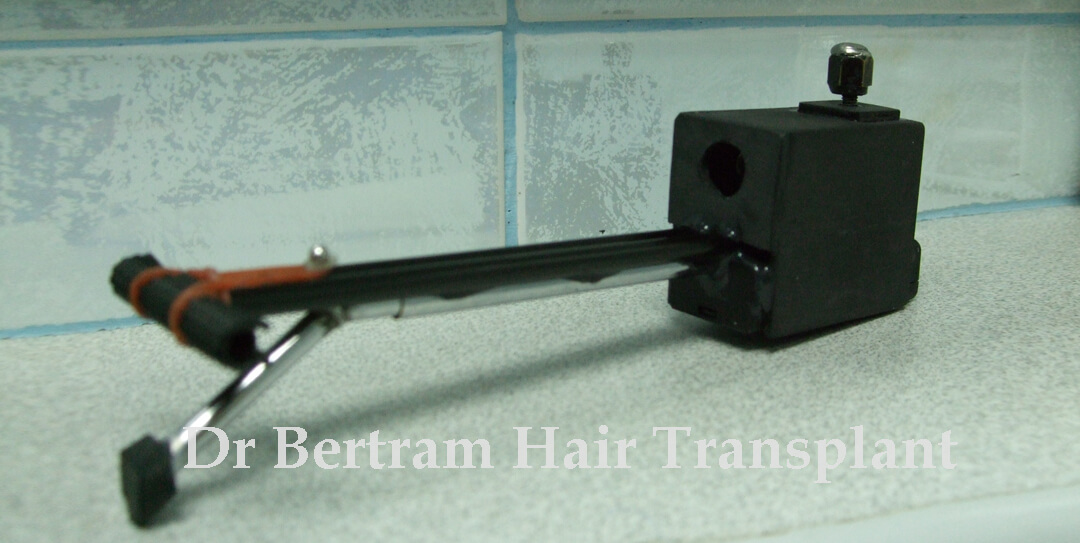
Third model — 2009
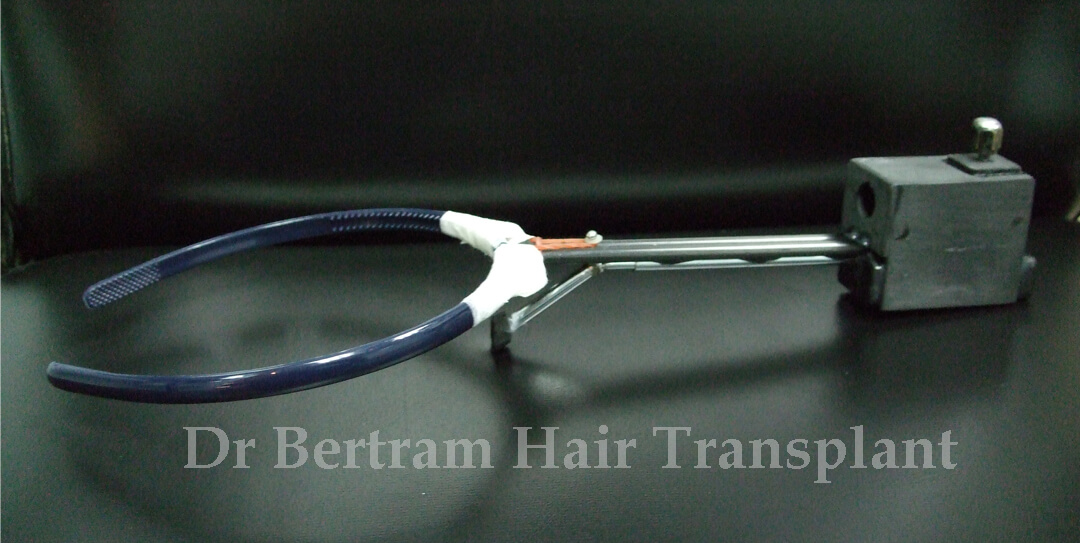
Fourth model — 2009
- 2007: Tripod-mounted laser levels used. Required significant space.
- 2008: Handheld device developed, allowing portable use. Published in Hair Restoration for Asians (Springer, 2009).
Clinical Benefits
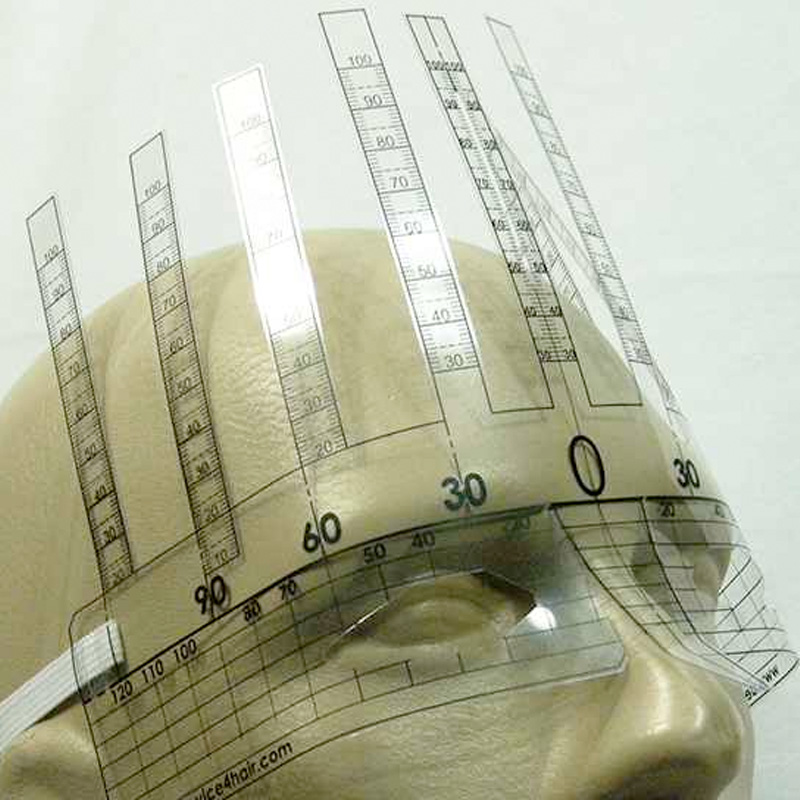
Traditional freehand design
- Symmetry: Projects a level baseline to guide design.
- Patient collaboration: Patient sees the projected line before marking, allowing real-time adjustment.
- Efficiency: Design time reduced from 15–20 minutes to under 1 minute.
Placement Steps
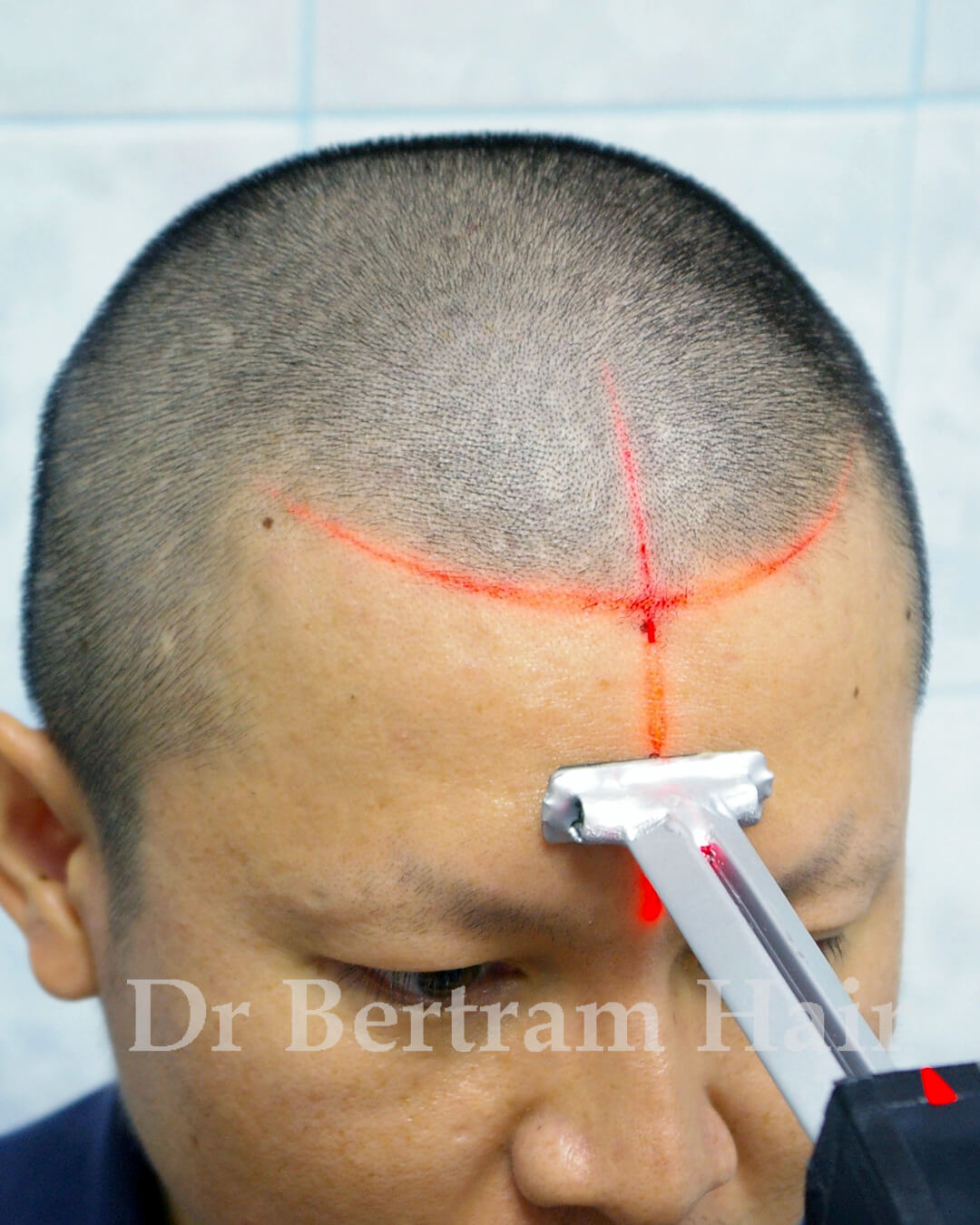
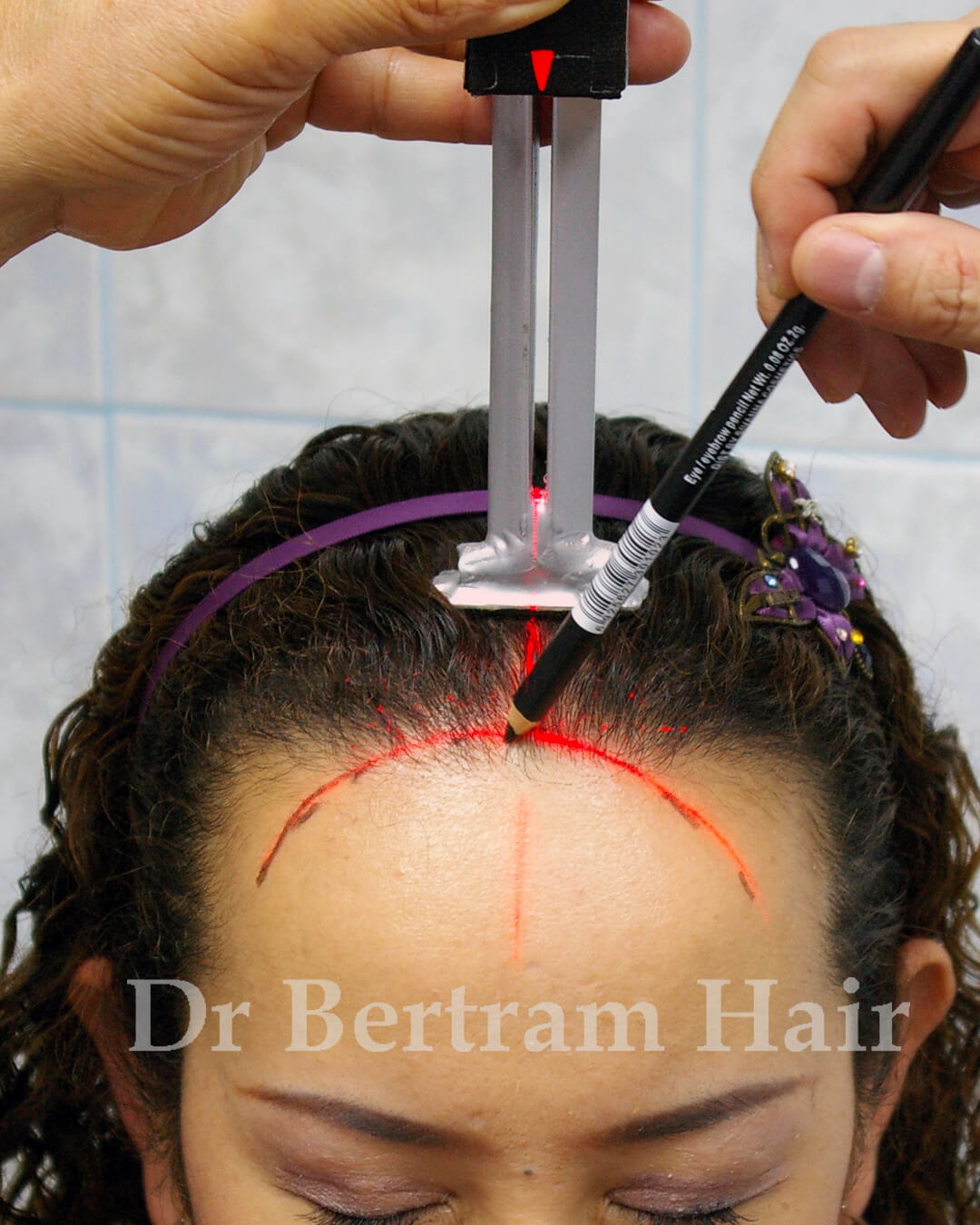
1. Establish Midline
Vertical laser beam aligned with facial landmarks to find anatomical center.
2. Project Contour
Device projects inverted-U shape for women, horizontal line for men.
3. Patient Review
Patient views the projected line and provides feedback.
4. Finalize Design
Once approved, the design is traced with a surgical marker.
Clinical Considerations
Advantages
- Improved symmetry
- Rapid execution (under 1 minute)
- Personalized contours based on forehead anatomy
- Published methodology
Limitations
- Surgeon artistry still required for natural irregularities
- May need intentional deviation if facial bone structure is asymmetrical
Selected References
- Rose P. Hairline Design. Hair Forum. Sept/Oct 2002;12(5).
- Shiao TK, Shiao IS. Laser-Guided Hairline Design. Hair Forum. March/April 2007;17(2):53-54.
- Ng B, Pathomvanich D. Laser-assisted hairline placement. Hair Transplant Forum Int. 2008;18(5):169-173.
- Pathomvanich D, Imagawa T. Hair Restoration for Asians. Springer, 2009.
Frequently Asked Questions
Q: Is laser hairline placement painful?
No. The laser is non-contact and painless — it only projects light for visual guidance.
Q: Does the laser replace surgeon skill?
No. The laser provides a framework; the surgeon adds natural irregularities and adapts to facial asymmetry.
Q: Can the laser be used for both men and women?
Yes. Inverted-U shape for women, flatter horizontal line for men.
Q: How long does the design take?
Under 1 minute, compared to 15–20 minutes with traditional freehand drawing.