
Female Hairline Restoration: Hairline Extension Technique
Clinical methodology for natural female hairline design.
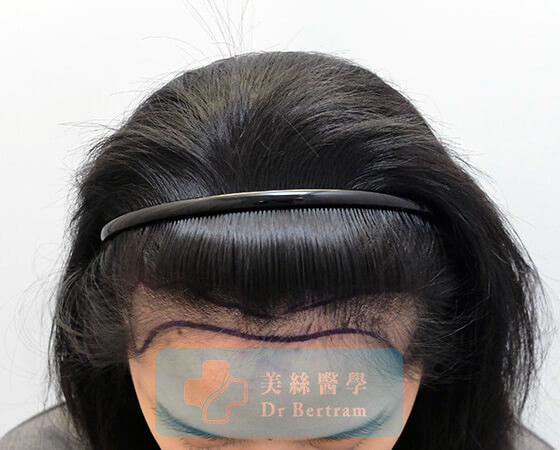
Before
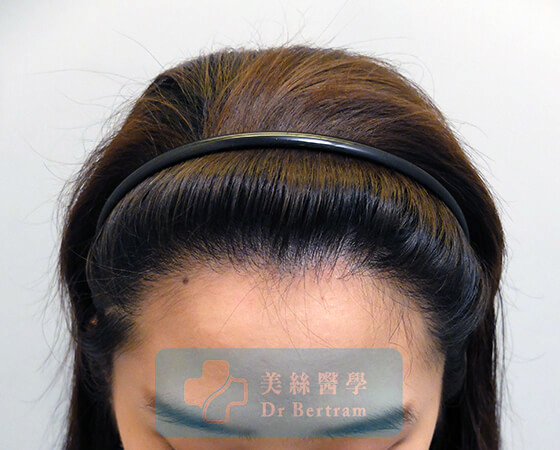
12 Months After
Hairline Extension Technique
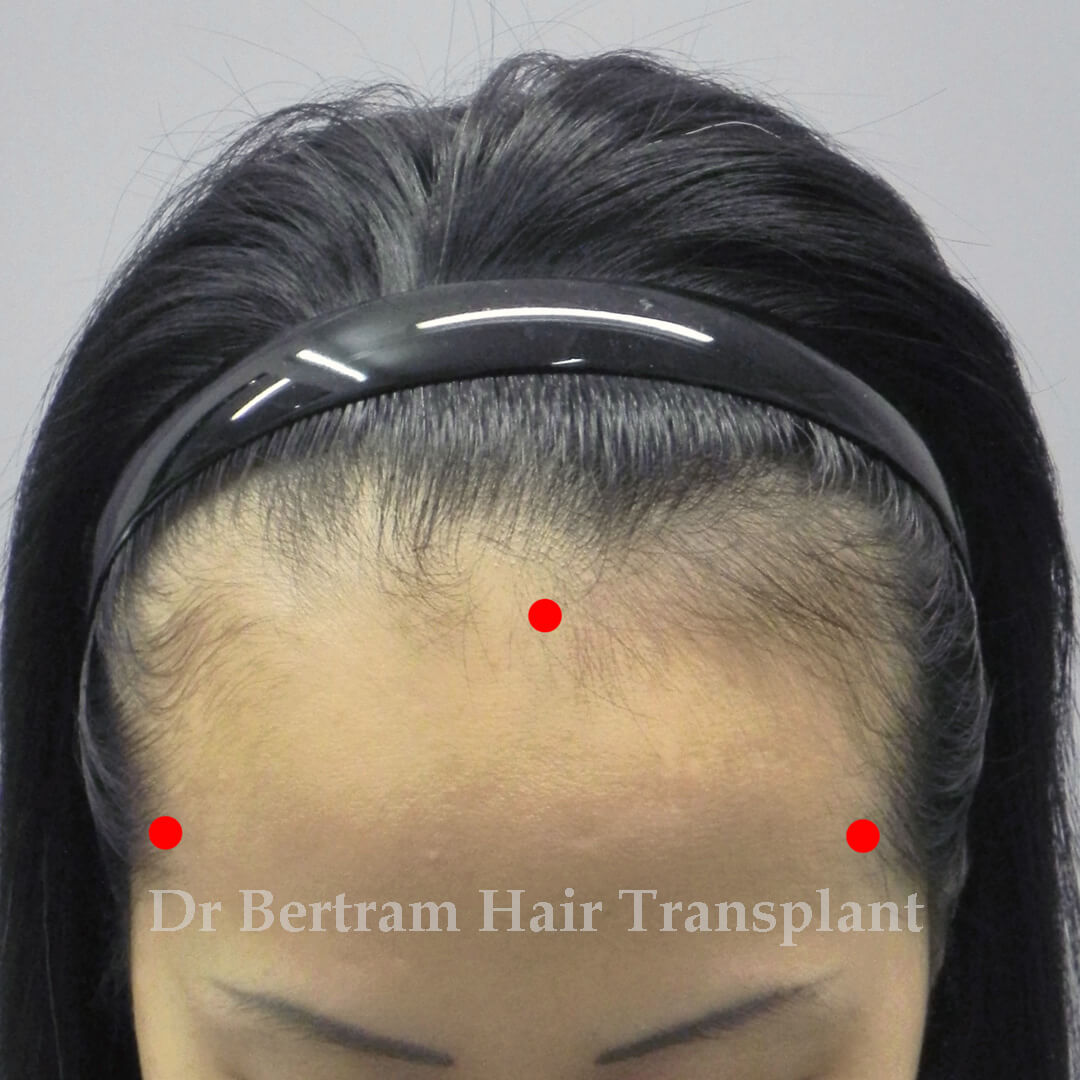
Initial landmark marking
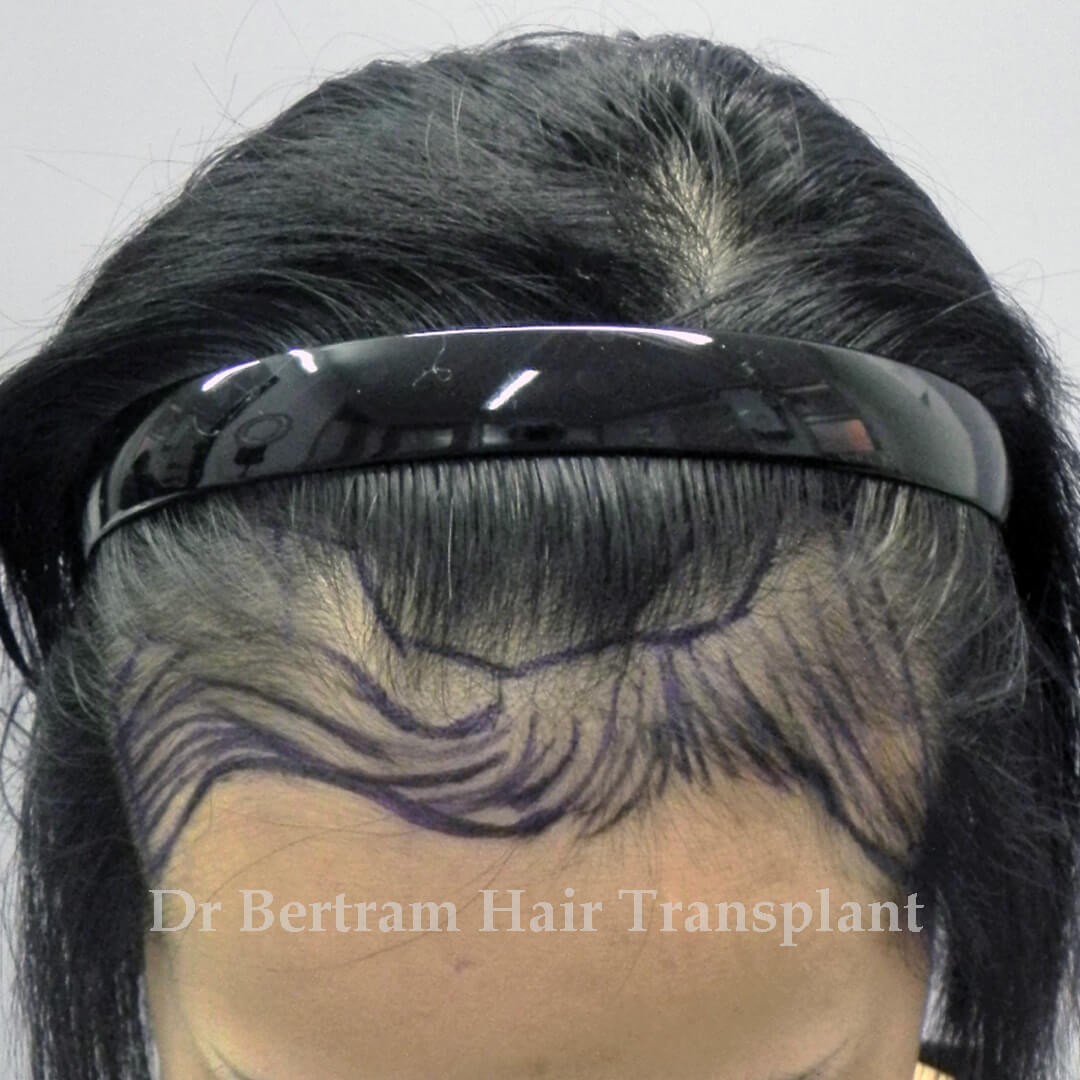
Mapping natural hair flow
- Mapping natural flow: Trace direction, curvature, and emergence angle of existing frontal hairs.
- Strategic landmark setting: Determine temporal peaks and frontal midpoint based on facial proportions.
- Extending the pattern: Extend traced flow forward, preserving cowlicks and subtle irregularities.
- Directional implantation: Place grafts at precise angle dictated by extension lines.
Clinical Considerations for Female Hairline Restoration

- Aesthetic precision: Female hairlines require soft, irregular, rounded contours.
- Visual impact: The hairline must appear natural under close scrutiny and bright lighting.
- Donor hair selection: Single-hair grafts are used to match the fine texture of frontal hair.
- Styling versatility: The hairline should appear natural when hair is pulled back.
Candidacy

- Congenital high hairline: Naturally high forehead seeking lowering.
- Temporal recessions: Triangular thinning at temples with stable central density.
- Stable hair loss: Localized pattern, not diffuse thinning across the entire scalp.
- Adequate donor supply: Sufficient density in the donor zone.
- Realistic expectations: Refinement and subtle lowering, not radical transformation.
A thorough medical evaluation is required to rule out active shedding conditions before surgical consideration.
Importance of Natural Hair Flow
- Seamless integration: New grafts blend with native hair.
- Authentic irregularity: Preserves natural mounds, humps, and micro-variations.
- Resilience to scrutiny: Appears natural from all angles and under various styling conditions.
- Long-term aesthetics: Avoids unnatural shapes that may clash with future facial changes.
Results & Implications
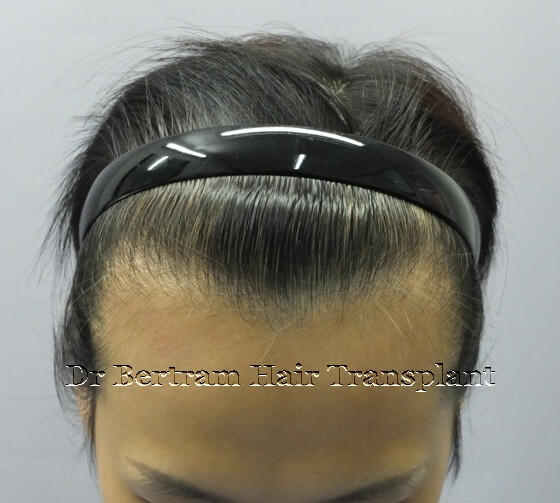
Before
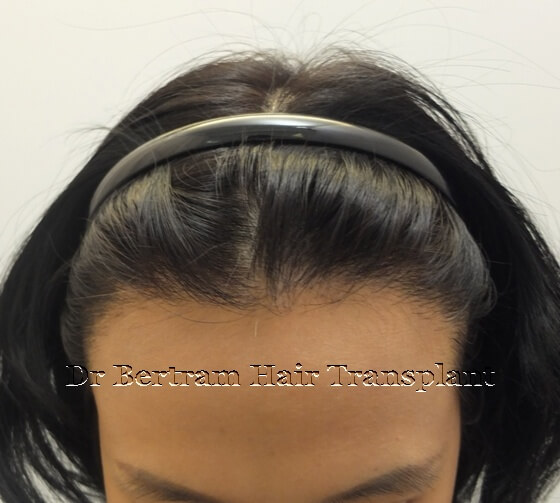
12 Months After
Primary Application
• Lowering and refining high or recessed hairlines in women with stable patterns.
Corrective Work
• Improving unnatural or overly straight results from prior procedures.
Long-Term Planning
• Restored hairline allows styling options as age-related thinning progresses.
Frequently Asked Questions
Q: Is this technique only for women?
Primarily designed for female patients, but flow-mapping principles may apply to select male cases.
Q: Will the hairline look natural when pulled back?
The technique is designed for seamless integration, supporting various styling options.
Q: How long until final results are visible?
Initial growth at 3–4 months, full maturity at 12 months.
Q: Can this technique fix a previous procedure?
Flow-mapping may help camouflage prior errors by integrating them into a new pattern.
Selected References
- Ng, B. My Hairline Extension Technique. Hair Transplant Forum International, 2013;23(4):126-127.
- Nusbaum, B. Naturally Occurring Female Hairline Patterns. Hair Transplant Forum International, 2012;22(3):89.
- Rassman, W. Hairline Evolution. Hair Transplant Forum International, 2013;23(6):197-205.
- Bunagan, M. and Pathomvanich, D. Hair Restoration Surgery in Asians. Springer, 2010:175-183.